Editor’s note: A PC (Steam) review copy was provided by Pearl Abyss.
Few games in 2026 have generated as much anticipation as Crimson Desert. It promises a massive open-world experience set in a rich fantasy universe—and for the most part, it delivers on scale. But that ambition comes with trade-offs. The game is so dense with systems and activities that it can feel overwhelming, even after dozens of hours.
After spending over 70 hours exploring its world, it’s clear that the game is packed with content—sometimes to its own detriment. While the sheer amount of things to do is impressive, not all of it feels meaningful, making the experience a mix of awe and exhaustion.
A Story That Struggles to Stand Out
Set on the continent of Pywel, the story follows Kliff, a mercenary from the Greymanes. After a devastating ambush by rival forces, Kliff is brought back to life with mysterious powers tied to a supernatural realm known as the Abyss. His journey revolves around rebuilding his scattered group while uncovering deeper secrets about the world.
The premise has potential, but the execution falls short. Kliff is written as a brooding, reserved protagonist, yet lacks the depth needed to form a strong emotional connection. Supporting characters also fail to leave a lasting impression, and uneven pacing further weakens the narrative.
While the lore and world-building are interesting, storytelling clearly takes a backseat to gameplay systems.
A Vast and Stunning Open World
Where the game truly shines is in its world design. Drawing inspiration from titles like Red Dead Redemption 2, The Legend of Zelda: Breath of the Wild, and The Witcher 3: Wild Hunt, the game offers a richly detailed environment with multiple biomes, massive cities, and varied landscapes.
Exploration is central to the experience. Travel is mostly done on horseback, though players can also ride more unconventional mounts like bears or dragons. Fast travel is limited, encouraging players to fully engage with the world’s scale.
There’s also a secondary layer called the Abyss, featuring floating islands filled with platforming challenges and puzzles. These sections demand observation and experimentation, as the game offers minimal guidance.
However, the enormous map—reportedly larger than The Elder Scrolls V: Skyrim—can sometimes feel disorienting. Not every area feels handcrafted, and the scale occasionally works against the pacing.
Too Many Systems, Too Little Refinement
The game’s design shows clear influence from MMORPG mechanics. There’s an abundance of activities: fishing, crafting, mining, base building, mini-games, and more. While variety is impressive, it often leads to clutter.
Interactions can feel clunky, requiring players to manually aim at objects to engage with them. Resource gathering—especially early on—is slow and repetitive, creating unnecessary grind. These systems interrupt the flow of exploration and can make progression feel tedious at times.
Combat: Ambitious but Inconsistent
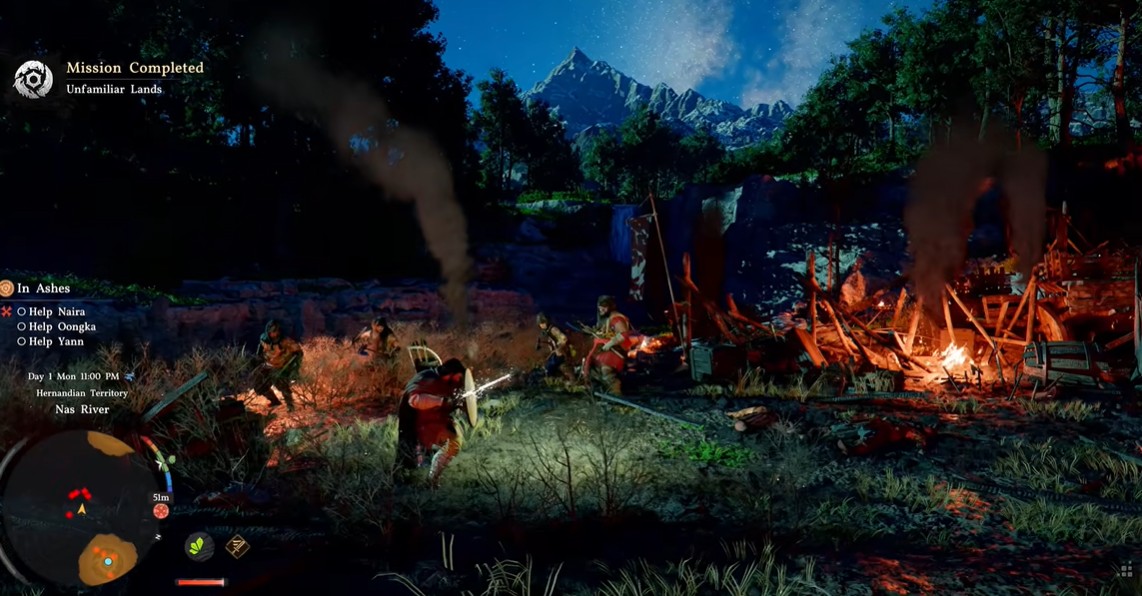
Combat is one of the game’s stronger aspects, offering a wide range of weapons and playstyles, from melee combat to magic and ranged attacks. Animations are fluid and visually impressive.
However, responsiveness is an issue. Dodging and targeting can feel unreliable, especially during chaotic encounters. Lock-on mechanics don’t always prioritize the right enemies, and ranged combat lacks precision, pushing players toward melee-focused strategies.
Boss fights, on the other hand, are challenging and demand careful timing and strategy, leaning heavily into Soulslike design.
Progression and Controls
Instead of traditional leveling, progression revolves around collecting special items to upgrade skills in areas like health, stamina, and magic. Players can respec freely, allowing flexibility in builds.
A standout feature is the ability to learn new skills simply by observing enemies—a clever mechanic that adds depth.
Unfortunately, the control scheme is unconventional and takes time to get used to, especially for players familiar with standard action-adventure layouts.
Interface and Inventory Issues
Menus are overly complex, often layered within each other. Inventory management becomes frustrating as items quickly pile up, and storage systems lack clarity. This is particularly problematic in a game that encourages constant looting.
Technical Performance and Presentation
From a technical standpoint, the game is exceptional. Powered by the BlackSpace Engine, it delivers stunning visuals and a seamless world.
Using Nvidia DLSS and frame generation, performance is excellent. On a high-end system (Ryzen 5 7600X and RTX 5070), the game runs at over 120 FPS at 1440p with max settings. Even without these features, it maintains a stable 60 FPS.
Audio design is also strong, with immersive music and solid voice acting enhancing the overall experience.
Final Thoughts
Crimson Desert is a technically impressive and highly ambitious open-world title. Its greatest strength lies in its sandbox design and expansive world, offering players freedom to explore and experiment.
However, its weak storytelling, clunky systems, and overwhelming amount of content prevent it from reaching its full potential. This is a game driven by mechanics rather than narrative.
If you’re looking for a story-rich experience like Red Dead Redemption 2, this may not meet your expectations. But if you enjoy deep sandbox gameplay in a visually stunning world, there’s plenty here to enjoy.
Verdict
A visually stunning and content-rich open-world experience that excels in scale and gameplay systems, but falls short in storytelling and overall polish.