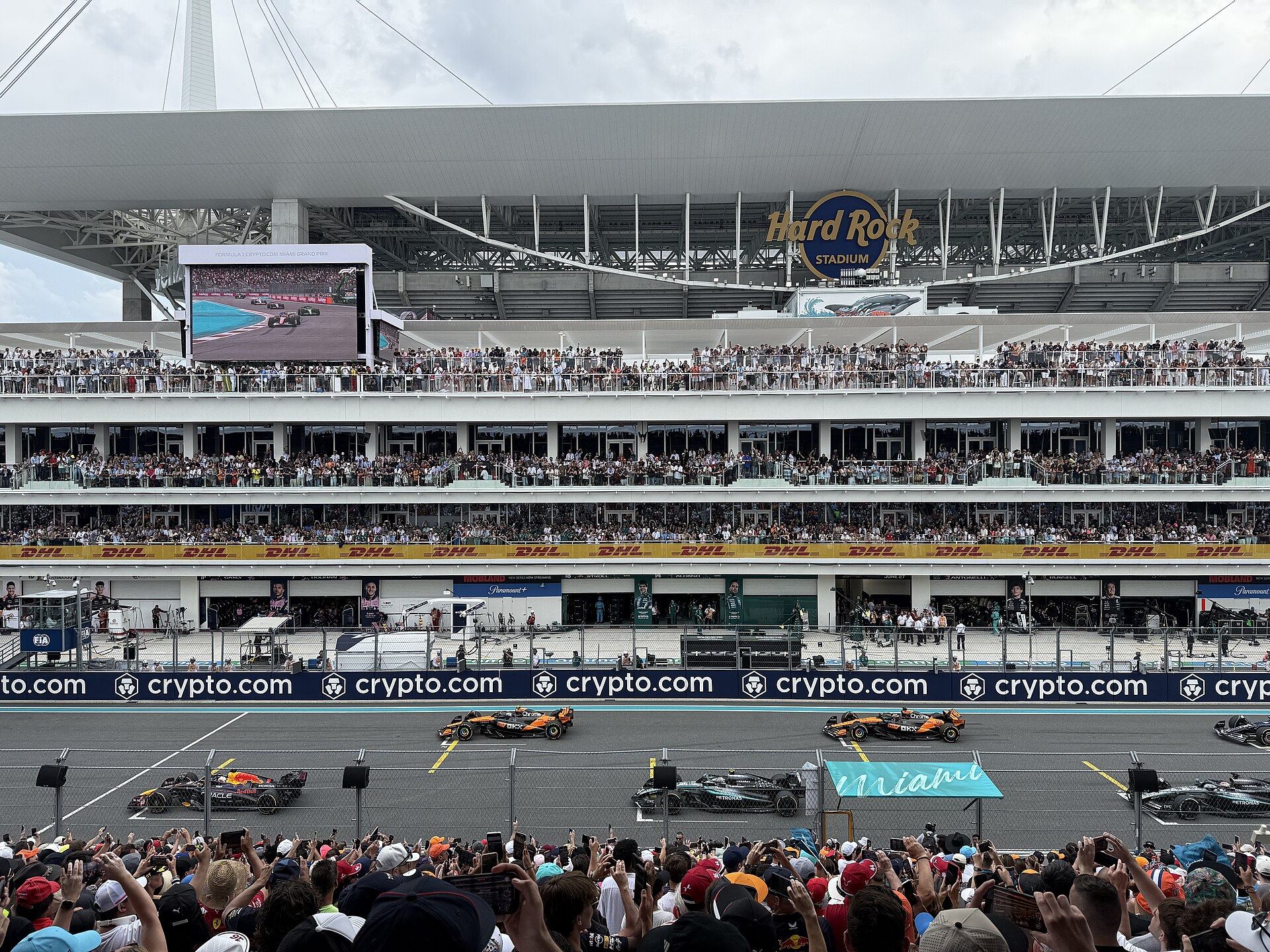
F1’s updated engine regulations will have a significant impact at the Miami Grand Prix, where electric power usage will be limited for nearly one-third of the lap. This race marks F1’s return after a month-long break and is the first event since major regulatory adjustments were agreed upon for the 2026 energy management framework.
The changes are aimed at making qualifying sessions more straightforward by curbing extreme battery-charging tactics, while also reducing large performance gaps between cars through revised energy deployment rules. However, because the fundamental engine design—featuring an almost equal split between internal combustion and electric power—cannot be altered mid-season, regulators have had to introduce alternative measures to control how teams optimize energy usage.
F1’s 2026 power units are already governed by detailed rules that dictate battery charging, energy deployment, and the operation of the MGU-K system. Ironically, attempts to simplify these systems have added further layers of complexity, as highlighted by the Miami-specific limits released ahead of the race weekend.
One of the key adjustments involves lowering the energy harvesting limit during qualifying laps. This encourages teams to rely more on natural braking phases to recharge the battery, rather than aggressive energy recovery strategies. However, because Miami is a circuit with ample opportunities for energy recovery, the harvesting limit for qualifying has been set at 8MJ—slightly above the standard 7MJ cap and matching the figure used in Japan.
During the race, a new rule introduces a 250kW cap on electric power output in certain sections of the track, compared to the MGU-K’s maximum capability of 350kW. In the past, teams already had to carefully decide where to deploy electric power due to limited battery capacity. Now, that strategic flexibility is reduced, as specific parts of the circuit enforce strict power limits.
At Miami, these restricted zones include Turns 1 through 8 and Turns 11 through 16, covering much of the first sector and a large portion of the second. The section between Turns 8 and 11 allows full power usage, as does the entire final sector, creating a varied energy deployment pattern across the lap.
Further complexity arises from track-specific rules in Miami’s high-speed sections. In sweeping corners such as Turns 1–3 and 5–8, the speed threshold for cutting MGU-K power has been raised from 210 km/h to 240 km/h. This adjustment is intended to prevent inconsistent energy deployment, as cars are expected to fluctuate around these speeds in those areas.
Combined with existing rules—such as staged reductions in power and restrictions on where deployment can be instantly cut—these updates highlight just how intricate F1’s current engine regulations have become.
Haas team principal Ayao Komatsu acknowledged the growing complexity, noting that such detailed rules can lead to unintended consequences. He suggested that while only minor tweaks are feasible during the season, the long-term focus should be on simplifying the regulations rather than adding further complications.